Unit of Study & Curriculum Map
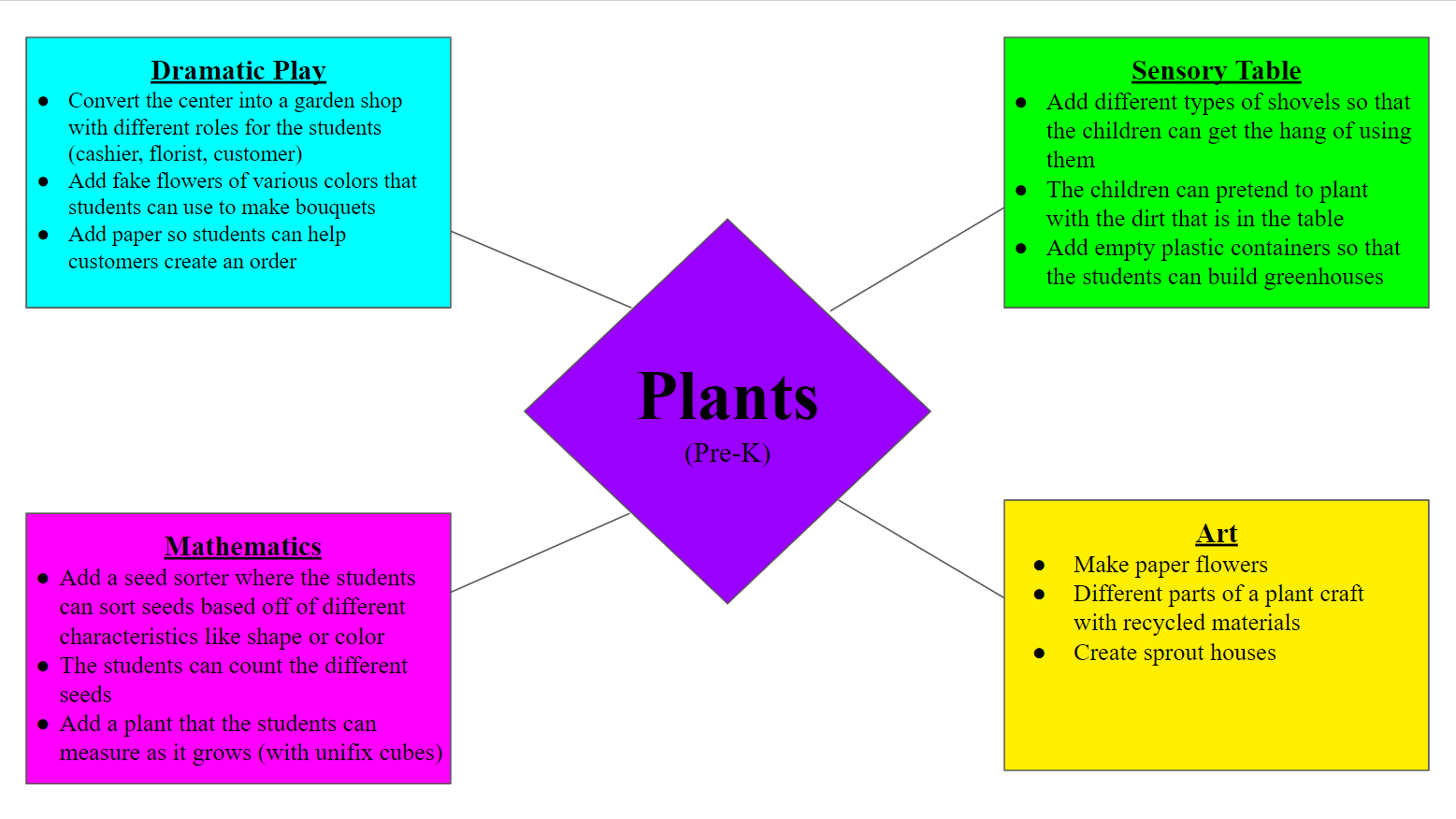
A unit on plants provides many opportunities because plants are all around us. Throughout this Plants Unit, the students will learn through hands-on explorations and observations. There will also be a number of activities that connect with this unit that will help develop many skills amongst the students. During the first week of this unit, we will be learning about what a plant is. During that week we will be talking about the different parts of a plant (root, stem, leaf, petals/flower) as well as what the different things a plant needs to live (water, air, sunlight, soil). The students will be able to create their own models that represent the different parts of a plant. During the second week of this unit, we will focus on where and how plants start off as; seeds. We will dissect beans in order to learn more about seeds and then the students will have opportunities to plant these seeds in cleaned out, recycled milk cartons that they will get to decorate beforehand. There will also be other types of seeds available to plant. These hands-on experiences will help the students to observe and use what they are learning to develop an appreciation for our environment. During the third week of this unit, the students will talk about the different types of plants that there are. The main type of plant we will focus on will be edible plants, including fruits and vegetables. We will create a class list of these edible plants and there will be an opportunity to cook/make something using the plants the students name. For example, if some of the plants the students mention are cilantro, tomatoes and avocados, we can make guacamole. Talking and learning about edible plants provide many diverse learning experiences, including broadening the range of nutritious foods for the students to enjoy. Lastly, during the fourth week of the unit, the students will become investigators of their own plants. The students will have many opportunities to observe the seeds they planted and see how they are growing, or not growing. They will also be able to make inferences about why they think the growing process might be different for each of their plants. Each student will have their own journal where they can keep record of their observations on the growth process of their plants. This investigation of plants will provide the opportunity for us, the educators, to support the student’s curiosity by helping them to ask questions, look for answers, make observations, and explore with all of their senses. To wrap up this Plants Unit, the students will be using the plants they have been growing in the classroom. The students will be able to take some of the plants home. We will encourage the students, and the families, to keep the plants growing in their homes. The remaining plants from the classroom will be used for a special day with the families. The families will be invited to come to our school garden in order to transfer those plants, with their children, into our class’s assigned potting beds.